Proof House Services
Proof is the compulsory and statutory testing of every new small arm before sale to ensure, so far as it is practicable, its safety in the hands of the user.
Reproof is the similar testing of a previously proven small arm that has been rendered “out of proof” because one or more of the small arm pressure bearing component(s) have been materially weakened in substance or strength. There are defined internal bore size enlargement increments allowed for shotgun barrels, these can be found in the relevant Rules of Proof.
Both processes involve the strict gauging of key dimensions including the chamber, barrel and cartridge headspace dimensions. Each small arm is then visually inspected and only then, if suitable, will be tested with proof ammunition.
Proof ammunition, is designed to produce a minimum mean pressure uplift of between 25% and 30% above that of the maximum mean service pressure listed for the calibre, depending on the requirements. Such pressure should disclose weaknesses in the small arms: it is far better the weakness be found at a Proof House rather than during use, where serious personal injury may result.
Upon submission to proof a Declaration Form (download) is required to be completed as part of the Birmingham Proof House Terms and Conditions (download).
The Birmingham Proof House recommends that small arms be submitted through a Registered Firearms Dealer (RFD), primarily because RFD's are fully aware of the requirements to submit to proof. Also if the arm is rejected or fails proof then a gunsmith/RFD is best placed to either repair the small arm, advise the customer that it is not possible to repair or uneconomical to repair. The Rules of Proof require all arms submitted to be in a fit condition. Please see the checks and reasons for rejection before proof (download).
*Please note: The Proof House, due to the nature of the proving process, asks that all non-essential operating components, such as telescopic sights and stocks be removed prior to submission. The Birmingham Proof House does not accept responsibility for any damage to such items resulting from the proving process.
The British Proof Laboratory is one of the leading ammunition test laboratories within the C.I.P., providing services for commercial and home loaders.
The Laboratory is ISO 17025 & ISO 9001 accredited. Both international standards being accepted throughout the world. Laboratories who achieve ISO 17025 accreditation have demonstrated that they are technically competent in all aspects relating to the scope of the accreditation and are committed to quality.
Within the framework of the assignments defined in 1-3 and 1-4 of the Agreement of 1st July 1969, the Permanent International Commission for the Proof of Small Arms decided upon the conditions under which ammunition placed on the civil market should be controlled to offer the highest possible guarantee of safety.
Cartridges loaded or reloaded in small quantities for personal use only and not given, sold or supplied to a third party for later distribution or sale, are not subject to C.I.P. Decisions.
For potential applicants C.I.P. Ammunition Control includes:
- An initial application by the manufacturer to the Proof House
- Pre-inspection of the manufacturer's facilities
- Sample testing
- Full auditing of the manufacturer's facilities in line with accepted Quality Management Systems
- Ongoing submission of manufacturer's test data
- Continuous monitoring of ammunition from the market place by the Proof House
- Comparative testing
- A formal contract listing the requirements and responsibilities of both parties
- Permanent dialogue between the manufacturer and the Proof House
If further information is required in regards to the testing of ammunition, please contact the appropriate Proof House representative by our email contact form. Sample ammunition for testing is required to be submitted using the appropriate Declaration Form. Examples of the Declaration Forms can be downloaded here (download).
C.I.P. Approval can be granted to a specific “Lot” of ammunition manufactured from the same components e.g. bullet, powder, cases, wadding etc. provided components are from the same batch.
Note, approval only relates to the Lot of ammunition tested. It cannot be used for subsequent Lots.
The British Proof Laboratory also carries out individual tests on samples of ammunition supplied, generally in the form of a 10 or 20 round test. This is particularly useful for home loaders, shooting press and possible incident reports.
Please contact the British Proof Laboratory, via the website email contact form, should you require any further information in regards to any of these services
The Birmingham Proof House certifies deactivated arms and the magazine restriction of shotguns to two shot capacity on behalf of the Home Office.
The current EU Deactivation Regulation and the Home Office Specifications for the adaptation of shotgun magazines and the deactivation of firearms can be found on the Home Office website link below.
https://www.gov.uk/government/publications/deactivated-firearms-implementing-regulation-eu-20152403
All arms are inspected in accordance with the relevant specifications to confirm compliance. If found to be satisfactory, the arms will be stamped or engraved with a deactivation or magazine restriction mark and issued with the appropriate certificate. The certificate gives details of the arm e.g. make, action type and serial number and the name of the submitter. If assistance is needed re; deactivation or magazine restriction certification or its processes, please contact our workshop via the website email contact form.
If a certificate is lost and a replacement required, the arm must be resubmitted for inspection before for a new certificate to be issued.
The Birmingham Proof House can, subject to an initial assessment, provide incident reports on damaged small arms and/or on the ammunition in use at the time of the incident. The Birmingham Proof House has many experts and state of the art resources in this field.
However, in most cases, we are only able to report on the most likely causes of failure. Such reports can, according to the individual requirements, take considerable time to compile.
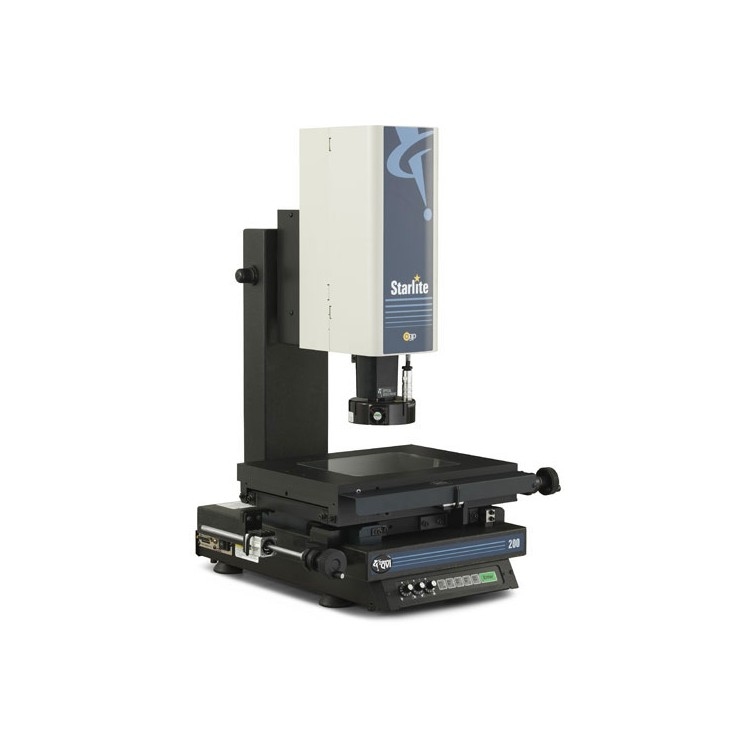 As an adjunct to our C.I.P. and Laboratory duties, the Proof House can offer gauge analysis, enabling manufacturers to ascertain if a gauge or tool meets current industry standards. Barrel chamber casting, using a low melting point alloy, is also available. Casting can be used to determine the calibre and compliance of a barrel.
Both services are carried out using our calibrated Starlite 250 Optical measuring machine.